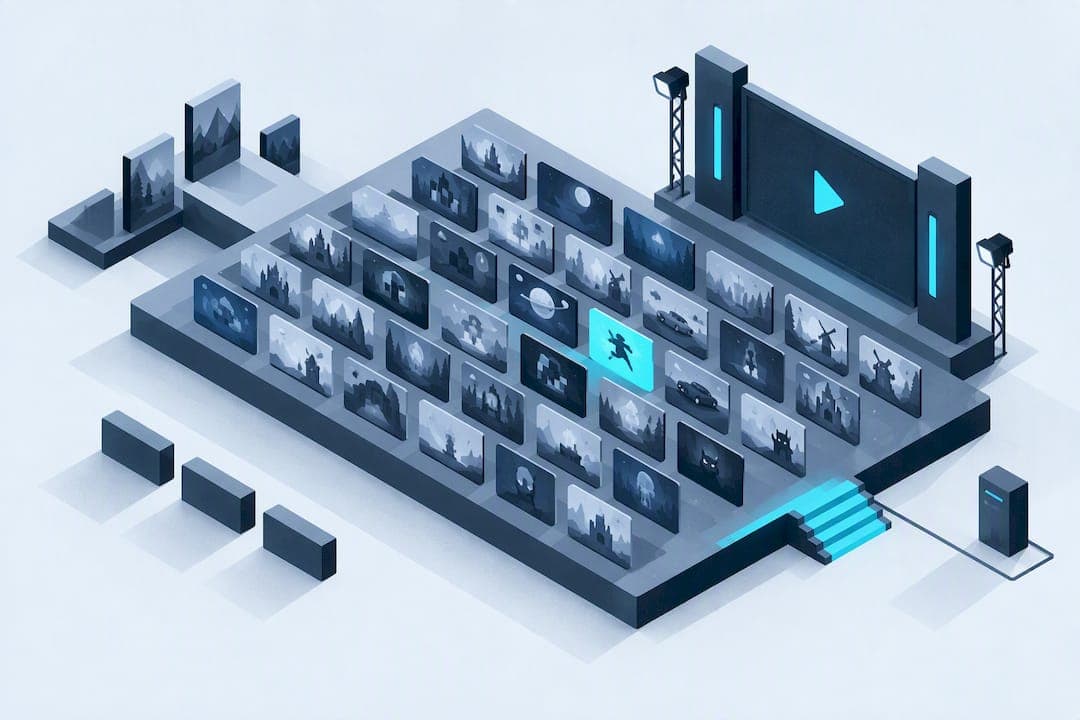
An indie game showcase is a short, focused event that gives independent developers a platform for trailers, demos, and world premieres. This article rounds up the current shows worth following, pulls out standout reveals, explains how to watch, and lays out what organizers look for when they pick submissions.
TL;DR:
- Triple-i fields more than 300 submissions for about 40 slots, balancing genre, art style, and development stage rather than choosing only finished games.
- Tiny Teams recommends gameplay trailers under 120 seconds; a demo can strengthen later shortlisting but usually is not required for the initial application.
- Most showcases stream on YouTube or Twitch, while Steam hosts festival pages; demo windows may last only a few days, so wishlist appealing games promptly.
- Submit a clear release window, a brief pitch explaining the game’s distinction, a concise press kit, and direct trailer and demo links for reviewers.
- Community voting can surface projects that juries omit, giving developers another route to visibility alongside scheduled showcases and their limited submission windows.
Table of Contents
- 1. Which indie showcases should you follow this season?
- 2. Standout reveals and demos worth your attention
- 3. How to watch or attend: streams, Steam events, and demos
- 4. How showcases pick games: a submission checklist for developers
- How are indie showcases changing, and what does that mean for you?
- What community voting adds to the showcase picture
- Where The Push fits for creators chasing visibility
- FAQ
- Sources
1. Which indie showcases should you follow this season?
A handful of recurring events have become the places where independent games actually break through, and each one serves a slightly different audience.
- Triple-i Initiative runs a concise, no-host showcase that packs roughly 40 indie games into a single stream, with world premieres and release date news delivered back to back with no filler.
- Tiny Teams is a Steam festival built around small-team projects, curating picks from developers who often lack the budget for a big marketing push.
- Indie Arena Booth, tied to events like TooManyGames, pairs a juried expo with a livestream and Steam event exposure, sometimes offering travel grants to selected teams through its EU showcase.
- Cozy After Dark leans into a specific niche: games that are cozy on the surface but strange underneath, with a showcase and tied Steam event that runs for several days afterward.
- Out of Bounds mixes a physical showcase with an online stream, giving attendees hands-on time while still reaching a remote audience through its hybrid format.
- Convention-tied lineups, including indie showcases at events like Awesome Con, round out the calendar with regional and community-focused picks that rarely get coverage elsewhere.
Each of these fills a different gap: Triple-i for volume and pace, Tiny Teams for scrappy small-team work, Indie Arena Booth for juried curation, and the themed or hybrid shows for niche audiences and in-person discovery.
2. Standout reveals and demos worth your attention
A few recent reveals illustrate what these showcases are actually good for: surfacing games you would not have found otherwise.
- A world premiere trailer debuted during the Triple-i Initiative stream, one of several first-look reveals packed into that single broadcast.
- A release date announcement landed in the same Triple-i lineup, part of the news-dense format organizers favor over long cinematic reels.
- A small-team platformer picked up visibility through Tiny Teams, the kind of project that fits the festival's focus on scrappy, low-budget development.
- A narrative-driven project earned a juried slot at Indie Arena Booth, reflecting the event's emphasis on variety across genre and development stage.
- A cozy-but-unsettling simulation title anchored the Cozy After Dark lineup, matching the showcase's specific tonal niche.
- A tied Steam event for Cozy After Dark gave several of its featured games a short demo window right after the broadcast.
- A hybrid-format reveal at Out of Bounds let attendees play a build on-site while the same trailer streamed to a remote audience.
- Multiple titles across these shows used their appearance to open demo access tied to a Steam festival, giving wishlisters something playable within days.
- Several Triple-i picks followed up their reveal with press kit links published in post-show recaps, making it easy to track a title after the stream ends.
- A handful of Indie Arena Booth entries used their juried slot to announce platform availability alongside the trailer, rather than waiting for a separate announcement.
If a title catches your eye, check its showcase page or the organizer's recap for a direct link to the trailer, demo, and store page.
3. How to watch or attend: streams, Steam events, and demos
Most of these showcases live on the same handful of platforms, so following a few channels covers nearly everything.
- YouTube and Twitch host the live broadcasts for Triple-i, Tiny Teams, and most Steam-tied showcases.
- Steam itself runs festival pages where demos go live, often for a limited window right after the stream.
- International audiences should also check bilibili and niconico, which frequently mirror or co-host these broadcasts for regional viewers.
- Demo availability tied to a showcase, as happens with Cozy After Dark's Steam event, tends to run just a few days, so wishlisting ahead of time matters.
Pro Tip: Wishlist a title the moment it's revealed; many Steam demo windows close within a week of the showcase.
Showcases often stream at a fixed time in one region's primetime, so check the organizer's announced schedule and convert it to your own time zone before the stream starts.
4. How showcases pick games: a submission checklist for developers
Organizers rarely choose based on polish alone. Triple-i reportedly fields more than 300 submissions for about 40 slots, which means curation leans on balancing genre, art style, and development stage rather than picking only the most finished builds.
That selection pattern shapes what actually helps an application:
- Submit a gameplay trailer under 120 seconds; Tiny Teams' developer guidance specifically recommends this length over a longer cinematic cut.
- Include a playable demo if you have one, since it strengthens later-stage shortlisting even when it isn't required at first.
- State a clear release window rather than leaving it vague, since organizers often pair reveals with concrete news.
- Prepare a clean press kit with one or two images, a one-line logline, and basic platform details so reviewers can scan it quickly.
- Write a one-paragraph pitch that explains what makes the game distinct, not just what genre it belongs to.
- List your contact information and a direct link to your trailer and demo so a juror doesn't have to search for it.
A short, well-made trailer often beats an early, buggy build when organizers make their first pass through hundreds of entries.
How are indie showcases changing, and what does that mean for you?
The clearest shift is toward host-less, rapid-format shows. Triple-i's own FAQ describes a "no ads, no host, just games" approach, and that content-first pacing is spreading to other showcases tired of padding runtime with ceremony.
Curation is also leaning away from "most polished wins." Juried events increasingly balance genre, region, and development stage, so a rough-around-the-edges project can land a slot next to a near-finished one. Hybrid formats, like Out of Bounds, split the difference further: they keep the reach of a livestream while adding the hands-on discovery of a physical booth, which matters for games that rely on feel rather than a trailer alone.
What community voting adds to the showcase picture

Juried showcases decide who gets a slot, but they can't surface everything. Community voting fills that gap by letting audiences pull overlooked projects into the spotlight on their own terms, not just at the right moment during a submission window. That matters because a lot of strong indie work never fits a juror's lineup needs but still deserves eyes on it.
Organizer-run showcases and community-driven discovery aren't competing paths. They're complementary ones, and developers who lean into both tend to build steadier visibility over time.
— cameron
Where The Push fits for creators chasing visibility
Showcases run on a schedule and a jury's picks. The Push Arena runs on your community, letting voters decide who gets amplified instead of waiting for a submission window to open.

- Enter the Push Arena by signing up, submitting your project, and taking part in live voting rounds.
- Climb the Raider leaderboard as your community rallies behind your work.
- Fans support creators directly by voting, joining rounds, and subscribing to help keep discovery running.
If you've got a project that deserves more eyes, enter the Push Arena and let your audience push you forward.
FAQ
What makes an event an indie game showcase?
An indie game showcase is a short broadcast or event where independent developers present trailers, demos, or world premieres, usually without the heavy production of a major publisher conference. Shows like Triple-i Initiative favor a rapid, no-host format that packs many reveals into one stream.
Where can I watch upcoming indie showcases live?
Most showcases stream on YouTube and Twitch, with Steam hosting tied-in festival pages and demo windows. International viewers can also catch mirrored broadcasts on bilibili or niconico depending on the event.
How long should my trailer be when submitting to a showcase?
Guidance from Tiny Teams recommends keeping a gameplay trailer under 120 seconds, since a short, clear clip tends to beat a long or buggy build during a first review pass. A playable demo helps later in the process but usually isn't required upfront.
Do I need a playable demo to get into a showcase?
Not always. Many organizers accept a strong trailer alone for initial selection and ask for a demo later if your game gets shortlisted, though having one ready can still strengthen your submission.
How does community voting fit alongside juried showcases?
Juried showcases pick a limited lineup based on genre balance and development stage, while community voting lets audiences amplify projects on their own schedule rather than during a fixed submission window. Platforms built around community-ranked visibility work alongside, not instead of, traditional showcases.
Sources
- The World's Coolest New Indie Gaming Showcase Officially Returns Next Month
- The Triple-i Initiative Showcase reveals news on 40 indie games
- Tiny Teams dev info (submissions open)